
Insurance is one of the quieter requirements in supplier registration, yet it causes surprising delays. A buyer wants assurance that if something goes wrong on a delivery or a site, the loss will not fall on them. A missing or outdated certificate suggests the supplier has not planned for that risk.
This article explains the types of cover buyers commonly request, what a reviewer checks on the certificate itself, and how to keep your insurance documents ready for new applications.
Why Buyers Ask for Insurance Evidence
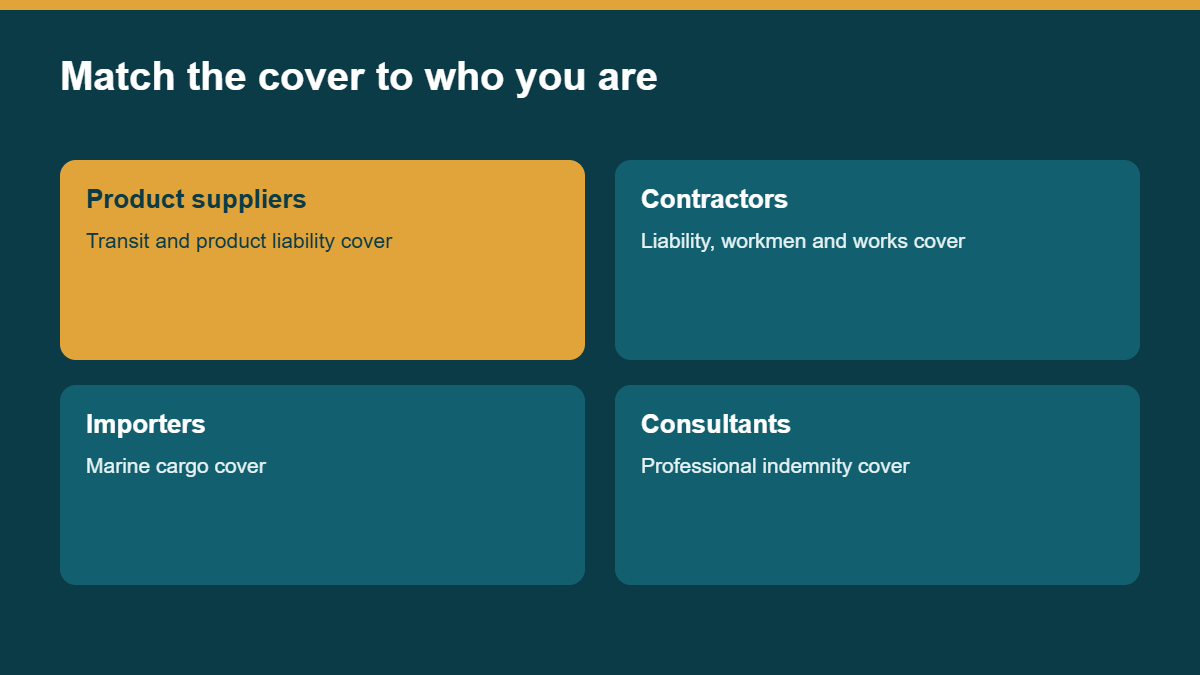
Insurance transfers part of the risk away from both parties. For product suppliers, the concern is usually transit damage and product liability. For contractors and service providers, it extends to injury, property damage and work in progress. Requirements depend on the buyer, the category and the contract value, so use the application checklist as your guide.
Types of Cover Commonly Requested
- Medical insurance for employees: commonly expected for workforce compliance in Saudi Arabia, and often linked to the checks described in our Nitaqat and workforce article.
- Third party or general liability: protects against claims for injury or damage caused by your operations.
- Workmen’s compensation or employer liability: relevant to contractors with site staff.
- Contractors’ all risks: relevant to construction and installation works.
- Marine cargo or transit cover: relevant to importers and suppliers who ship goods.
- Professional indemnity: relevant to consultants and technical service providers.
Insurance in the Kingdom is supervised by the Insurance Authority, and buyers generally expect cover from licensed insurers.
What a Reviewer Checks on the Certificate
A reviewer does not just look for the word “insurance”. They compare details on the certificate against the rest of your file.
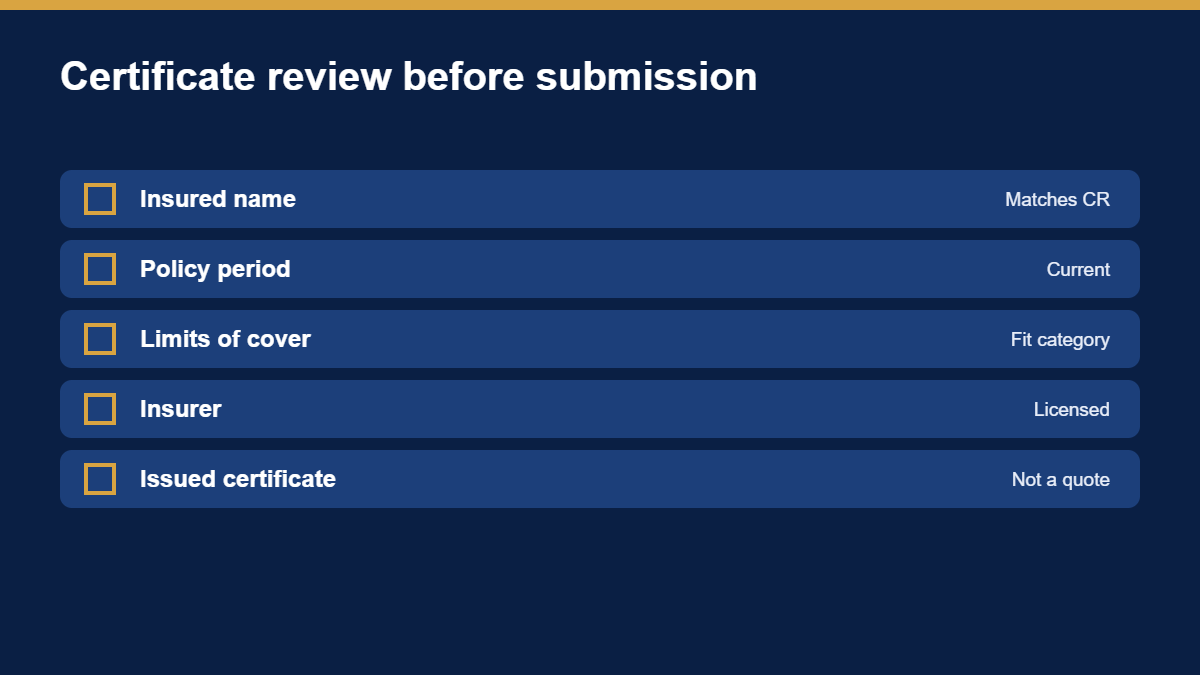
- The insured name matches your commercial registration exactly.
- The policy period is current, with margin before expiry.
- The type and limit of cover fit the category and contract scale.
- The insurer is licensed and the policy number is clearly shown.
- The scope or activity described does not contradict your registered activity.
Keeping Insurance Ready
Insurance renews annually, which makes it a frequent cause of expired documents. Record every policy end date in one tracker alongside your other certificates, as suggested in our guide to vendor registration renewal. Ask your broker for a clear certificate copy at each renewal and store it in your master document file.
Common Mistakes
- Submitting a policy that expires within weeks of review.
- A mismatch between the insured name and the legal company name.
- Presenting a general policy when the category needs specific cover.
- Providing a quotation or invoice instead of the issued certificate.
- Forgetting to renew cover before a portal update request.
How Wazir Solution Can Help
Wazir Solution helps suppliers and contractors check insurance and other compliance documents against buyer requirements before submission. Learn more on our website or write to us at info@wazirsolution.com.
Frequently Asked Questions
Do all suppliers need the same insurance?
No. The cover required depends on the buyer, the category and the nature of the work, so check each application checklist.
Is an invoice from the broker enough?
Usually not. Buyers expect the issued certificate or policy schedule showing insured name, period and limits.
When should I renew insurance?
Renew before expiry and update the copy in your document file at once so no application is submitted with an outdated certificate.
Ready to prepare your registration?
Choose an organization and vendor category, then continue to the secure WazirSolution registration portal.
Browse Organizations →