
On large projects, much of the work is performed by subcontractors. Buyers know this, and many of them control who may work on their projects through approved subcontractor lists and formal approval steps. A subcontractor that is not approved, or a main contractor that appoints one too late, can face delays or be asked to replace the party.
This guide explains how subcontractor approval typically works and what both sides should prepare.
Why Subcontractor Approval Matters
Buyers hold the main contractor responsible for everything on site, including the work of subcontractors. Approval gives the buyer confidence that every party is licensed, financially sound and safe. Requirements vary, so always follow the contract documents and the buyer’s procedure.
How Approval Usually Works
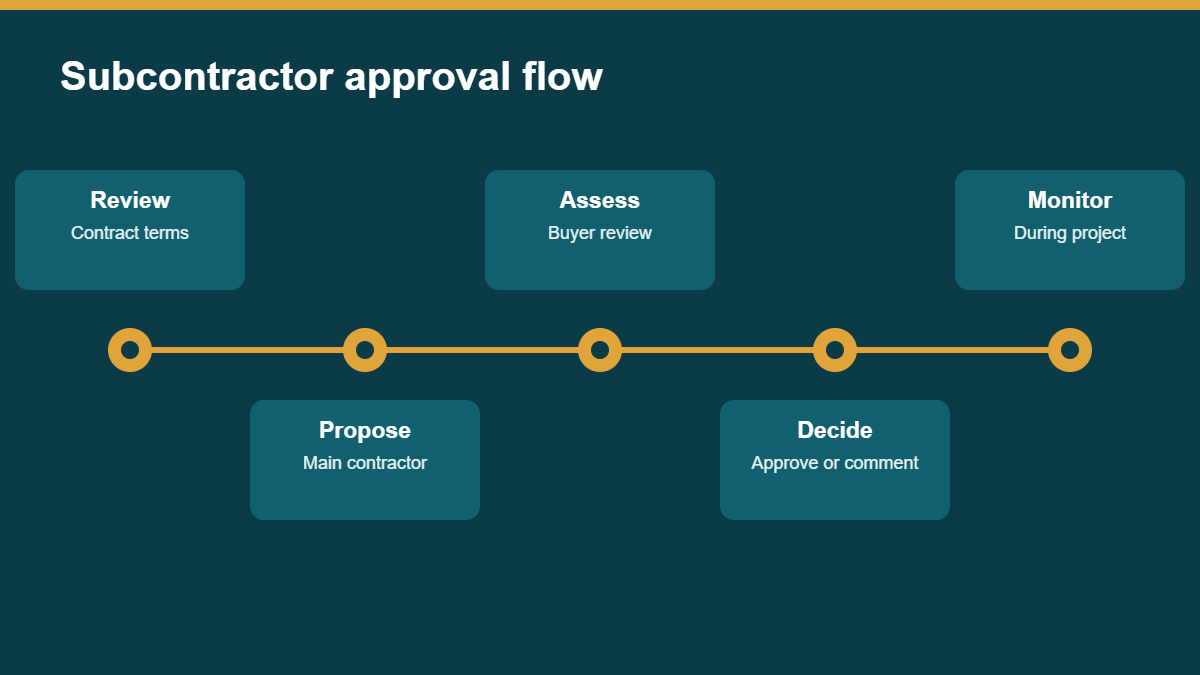
- Contract review: the main contractor checks which scopes may be subcontracted and whether consent is required.
- Proposal: the main contractor nominates a subcontractor and submits its details to the buyer.
- Document review: the buyer reviews licences, financial and safety evidence.
- Approval or comment: the buyer approves, rejects or asks for more information.
- Ongoing monitoring: approval may be reviewed during the project.
What a Subcontractor Should Prepare
A subcontractor should hold a file that resembles a short prequalification pack. The evidence differs by scope, but the foundation is similar to the one covered in contractor prequalification basics.
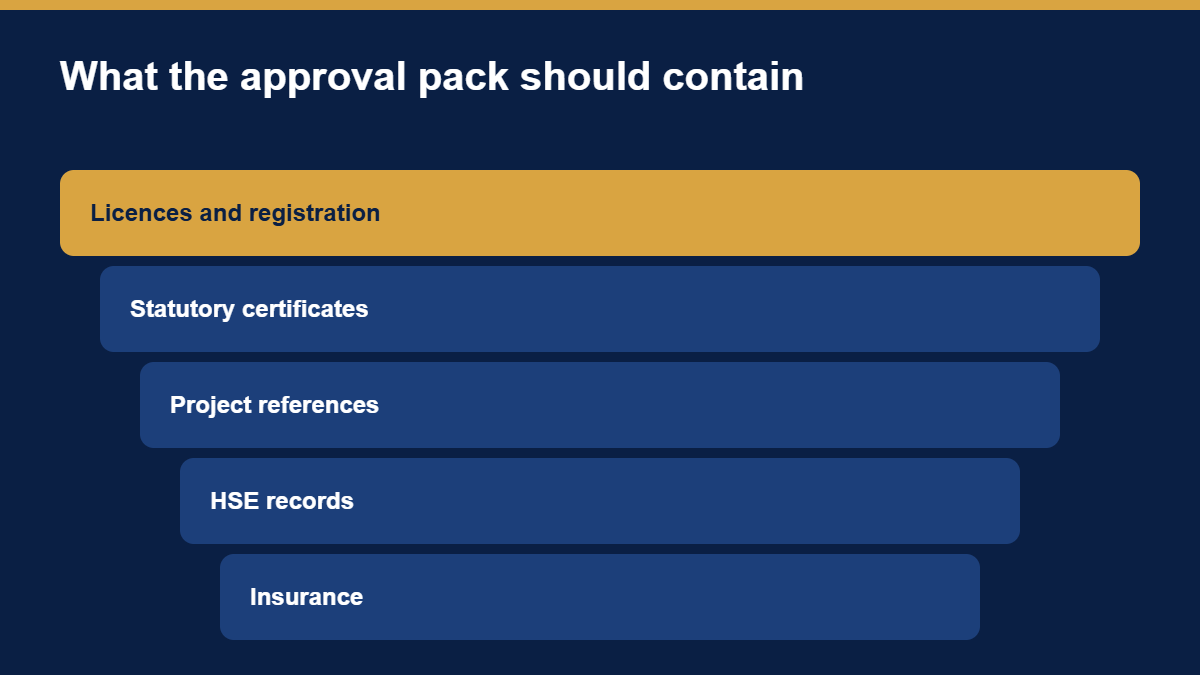
- Valid commercial registration and relevant licences.
- Statutory certificates for tax, social insurance and workforce compliance, as described in Zakat, tax and GOSI certificates.
- Project references relevant to the scope.
- HSE records and procedures, see HSE requirements for contractors.
- Insurance certificates, see insurance certificates and coverage.
What a Main Contractor Should Do
The main contractor should vet subcontractors before proposing them and submit complete, consistent packs. Allow time for the buyer’s review inside the project programme, because approval is rarely instant. Keep a register of approved subcontractors, their validity dates and the scopes they are cleared for.
Local Content and Workforce Considerations
Subcontracting choices can affect local content and Saudization results on a project. Where these matter to the buyer, consider them when selecting subcontractors. For background, see local content and vendor registration and our article on the Nitaqat certificate.
Common Mistakes
- Starting work before the subcontractor is approved.
- Submitting incomplete packs and losing weeks to repeated requests.
- Letting subcontractor licences or insurance expire during the project.
- Using a subcontractor for a scope outside its approved category.
- Not keeping a register of validity dates.
How Wazir Solution Can Help
Wazir Solution helps subcontractors and main contractors prepare approval packs that are complete, consistent and ready for buyer review. Learn more on our website or write to us at info@wazirsolution.com.
Frequently Asked Questions
Do all subcontractors need buyer approval?
It depends on the contract. Many buyers require approval for subcontracted scopes, so check the contract documents.
Who submits the subcontractor documents?
Usually the main contractor submits them on behalf of the subcontractor, following the buyer’s procedure.
Can approval be withdrawn?
Yes. Buyers may review approvals, especially if documents expire or performance is poor.
Ready to prepare your registration?
Choose an organization and vendor category, then continue to the secure WazirSolution registration portal.
Browse Organizations →