
Alongside licences and financial documents, many supplier applications include a set of signed declarations. These cover ethics, conflicts of interest and compliance with anti-corruption rules. They look like routine paperwork, but buyers take them seriously, and an inaccurate or unsigned declaration can stop an application.
This guide explains what these declarations typically cover, who should sign them, and how to treat them as part of a real compliance practice rather than a form to be rushed.
Why Buyers Require Conduct ديسمبرlarations
Large buyers in Saudi Arabia, including government entities and major industrial companies, protect themselves against reputational and legal risk from their supply chain. Anti-corruption efforts are supported by national bodies such as Nazaha, the Oversight and Anti-Corruption Authority, and buyers reflect that expectation in their onboarding.
What These ديسمبرlarations Usually Cover
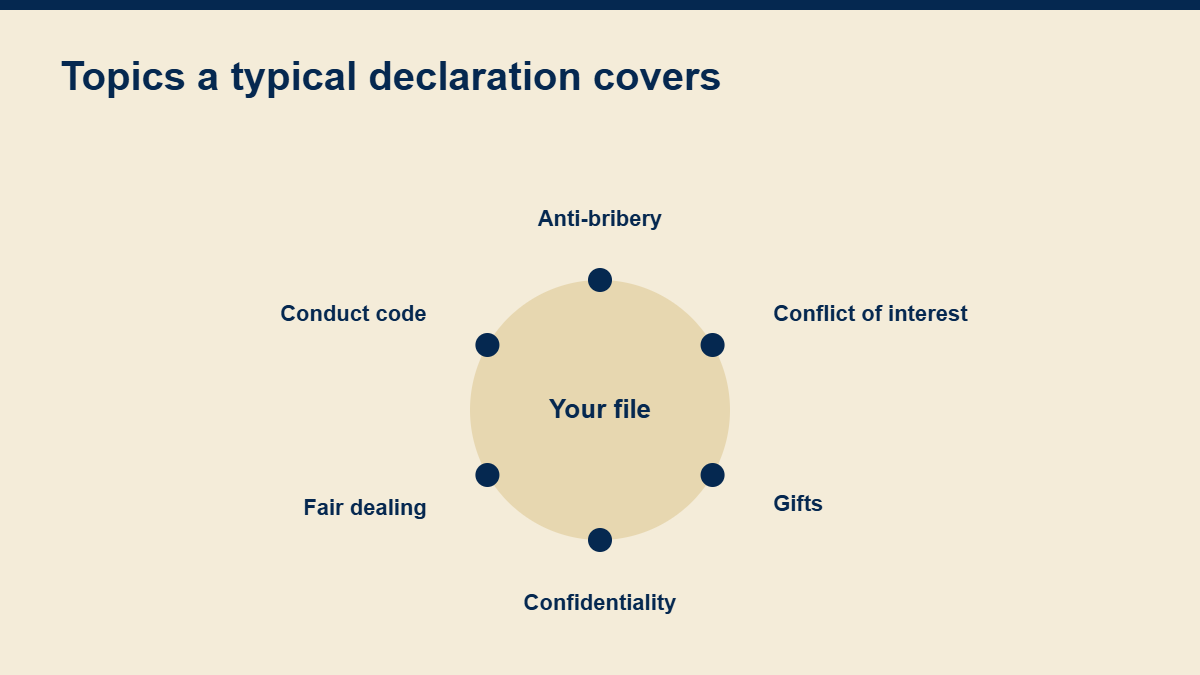
- Anti-bribery and corruption: a commitment not to offer or accept improper payments or benefits.
- Conflict of interest: disclosure of any relationship with the buyer’s employees or decision makers.
- Gifts and hospitality: agreement to follow the buyer’s limits on gifts.
- Confidentiality: protection of the buyer’s information shared during tenders and contracts.
- Fair dealing: commitments on honest pricing, no collusion and truthful information.
- التوريد code of conduct: expectations on labour practices, safety and the environment.
Who Should Sign and How
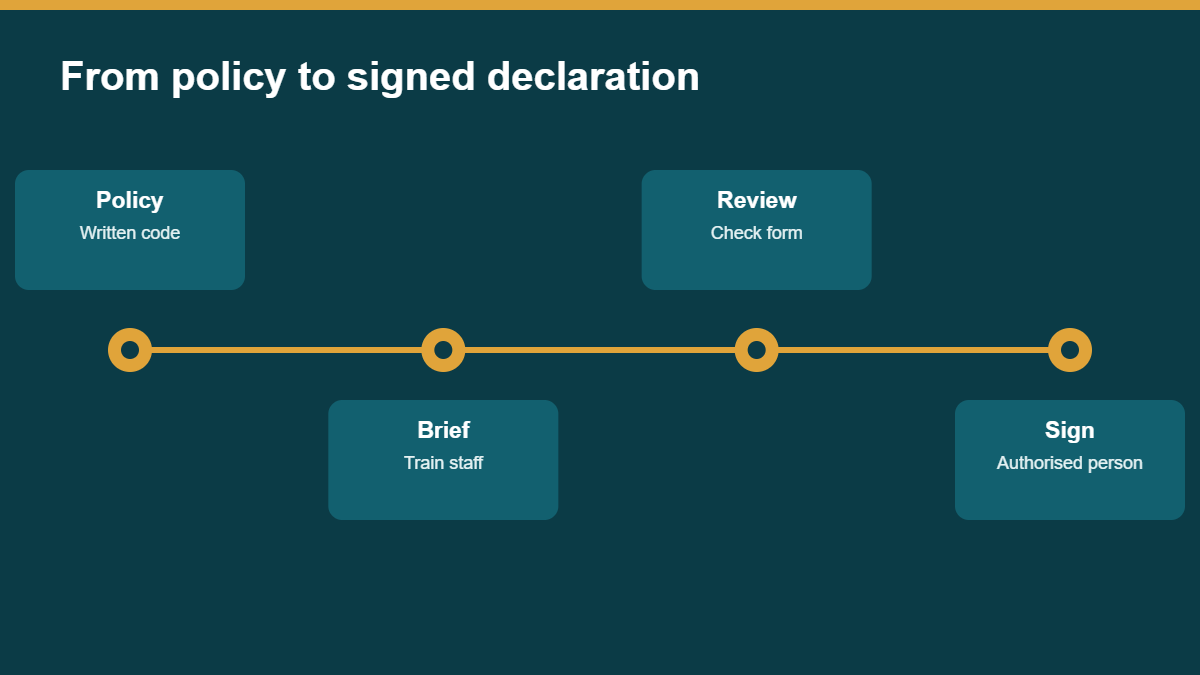
ديسمبرlarations are normally signed by an authorised signatory whose authority appears in your articles of association or a valid power of attorney. The name, title and signature should match your other documents. Where a company stamp is customary, apply it clearly. A declaration signed by someone without proven authority is a frequent reason for a clarification request. See our guide on core company documents for how signatory details should stay consistent.
Answer Disclosure Questions Carefully
Many forms ask whether the company or its owners have relationships that could create a conflict, or have faced past sanctions or disputes. Answer truthfully and completely. A disclosed relationship is usually manageable; a concealed one discovered later can end a business relationship. If you are unsure whether something needs disclosure, raise it with the buyer or take advice before submitting.
Make It Part of Everyday Practice
Buyers can tell the difference between a company that signs a form and a company that follows the rule. Keep a short internal code of conduct, brief your sales and procurement staff, and keep records of any gifts or conflicts that arise. This also supports the broader compliance evidence discussed in how Saudi buyers evaluate supplier applications.
Common Mistakes
- Leaving declarations unsigned or signed by an unauthorised person.
- Using a different company name on the form from the registered name.
- Answering disclosure questions casually or inconsistently.
- Copying declarations from another buyer without checking the wording.
- Failing to update declarations when ownership or management changes.
How Wazir Solution Can Help
Wazir Solution helps suppliers review declarations and compliance forms so they are accurate, signed correctly and consistent with the rest of the file. Learn more on our website or write to us at info@wazirsolution.com.
الأسئلة الشائعة
Are conduct declarations mandatory?
Many buyers require them as part of onboarding. Check the checklist for your application to see which forms apply.
Who can sign a declaration for my company?
An authorised signatory whose authority is shown in the company documents or a valid power of attorney.
What if my company has a possible conflict of interest?
Disclose it. Buyers generally prefer clear disclosure over a relationship discovered later.
هل أنت مستعد لتجهيز تسجيلك؟
اختر جهة وفئة مورد، ثم تابع إلى بوابة التسجيل الآمنة لدى وزير سوليوشن.
تصفح الجهات →