
For a product supplier, the catalogue and datasheets are the part of the file that shows what you actually sell. A buyer’s technical team may never meet you, so these documents speak for the product. If they are vague, outdated or inconsistent, the reviewer has no way to judge whether the product fits the need.
This guide explains how to prepare catalogues, datasheets and supporting evidence that make technical review straightforward.
What the Technical Reviewer Wants to Know
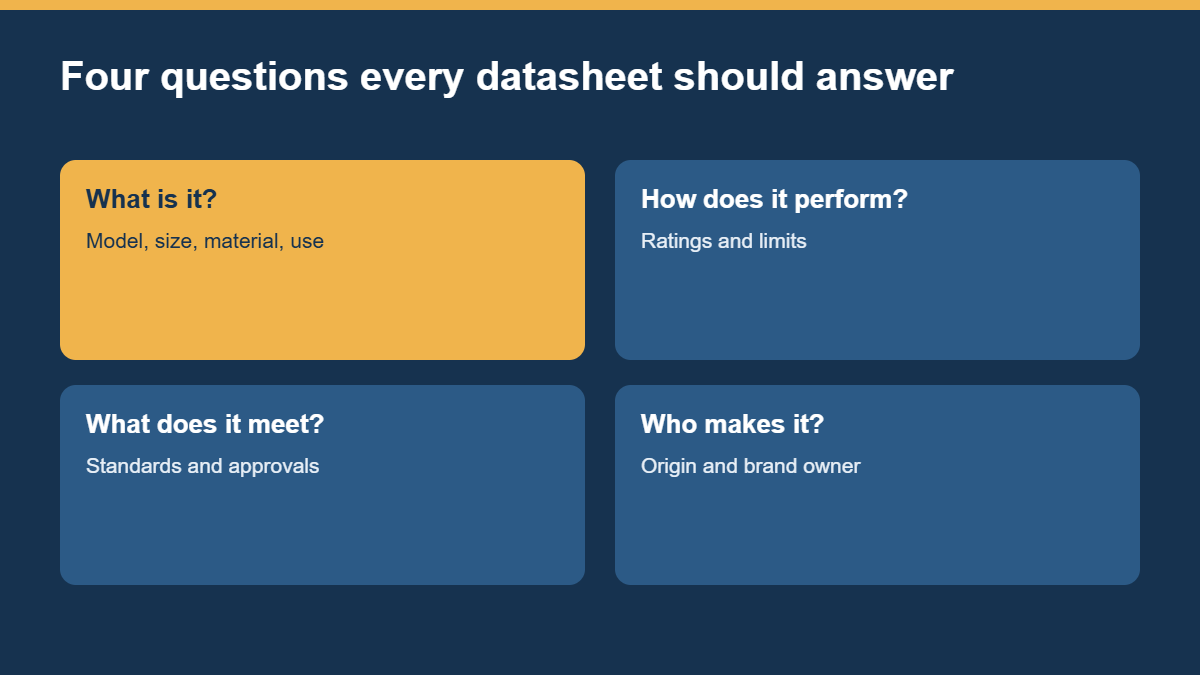
A technical reviewer asks practical questions. What exactly is the product? Which standards does it meet? What are its ratings and dimensions? Where is it made, and who stands behind it? Your documents should answer these questions without needing a phone call.
- Product identity: model, size, material and intended use.
- Performance data: ratings, tolerances and operating limits.
- Standards and approvals: the specifications the product is tested against.
- Origin and manufacturer: country of origin and the factory or brand owner.
Preparing a Useful Catalogue
A catalogue should be organised by the categories you are registering for, not as a complete brochure of everything you ever sold. Keep it current, show clear product codes and avoid marketing language that does not carry technical meaning. Where you distribute for a manufacturer, make sure the catalogue is supported by the authorisation described in our guide to manufacturer authorization letters.
Datasheets That Stand Up to Review
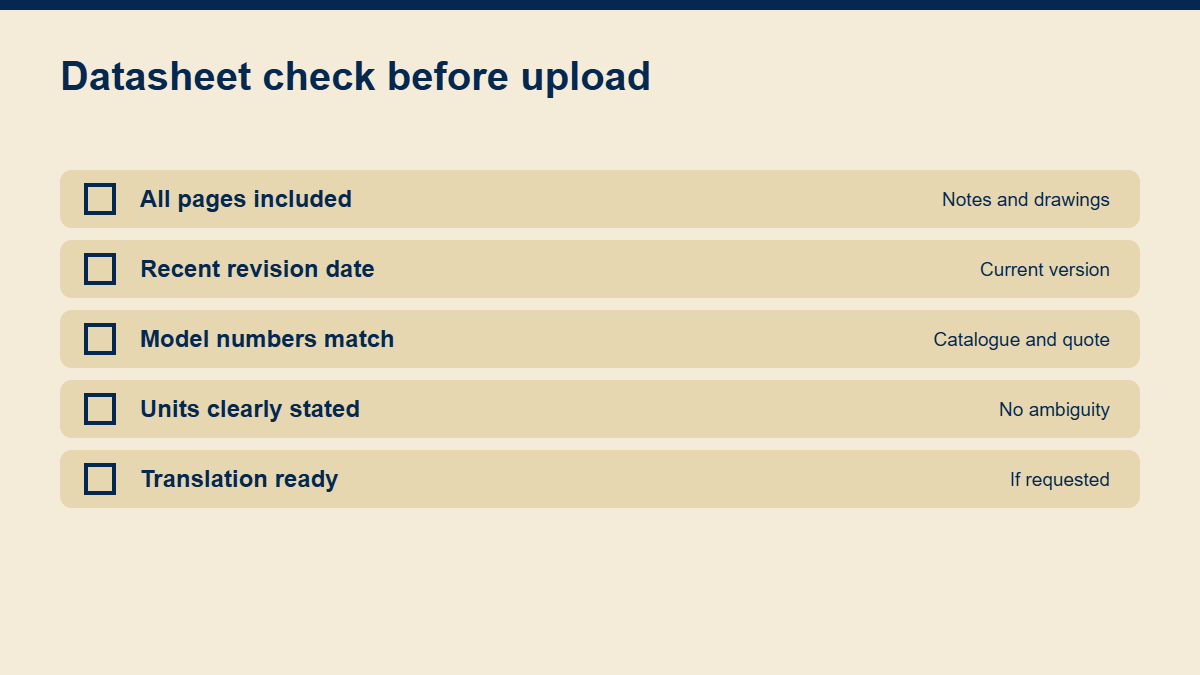
Use the manufacturer’s official datasheet where possible, in a clean, complete copy. Check that the revision date is recent, that part numbers match your catalogue and that any units are clearly stated. If you supply under a project specification, confirm that the datasheet values meet or exceed it.
- Include every page, including notes and drawings.
- Match model numbers exactly to those in your quotation and catalogue.
- Provide translations or summaries where the buyer needs Arabic.
- Remove superseded versions from your shared files.
Test Reports and Certificates
Many categories need independent evidence, such as test reports or product certificates. Product conformity in the Kingdom is overseen by bodies such as the Saudi Standards, Metrology and Quality الجهة, and buyers often expect proof of compliance with applicable standards. Quality system certificates support the same message, as covered in ISO certifications and quality documents.
Keep Everything Consistent
Inconsistency is the quiet cause of many rejections. A model number that differs between catalogue, datasheet and certificate forces a clarification request. Build one master product list and make every document refer back to it, then store the final set in your master document file.
Common Mistakes
- Submitting a full brochure instead of the relevant product range.
- Using datasheets that are outdated or incomplete.
- Model numbers that differ between documents.
- Missing test reports for products that require them.
- Claiming approvals that the documents do not support.
How Wazir Solution Can Help
Wazir Solution helps manufacturers and distributors prepare technical documents so product evidence is complete, consistent and easy for buyers to review. Learn more on our website or write to us at info@wazirsolution.com.
الأسئلة الشائعة
Should I send my complete catalogue?
Send the part relevant to the category you are registering for, kept current and clearly coded.
Can a distributor use the manufacturer’s datasheets?
Yes, usually together with a valid authorisation from the manufacturer, as buyers expect.
Do I need test reports for every product?
It depends on the product and buyer. Check the technical requirements for your category.
هل أنت مستعد لتجهيز تسجيلك؟
اختر جهة وفئة مورد، ثم تابع إلى بوابة التسجيل الآمنة لدى وزير سوليوشن.
تصفح الجهات →